Rainfall is Cash: Why Nebraska Irrigators Are Turning to "Soil Armor"
Media Contact:
Thomas Hoegemeyer, Chair, Nebraska Soil Health Coalition
thoegemeyer2@unl.edu
Hometown: Hooper, Nebraska (Dodge County)
Think you don't need healthy soil because you've got a pivot? Think again. Saving water, energy, and topsoil is easier than you think—and it starts with a simple challenge.
Last month, Dr. Paul Jasa wrote an extremely insightful article on “harvesting” rainfall. The real question isn’t how much rain falls on your fields; it’s how much of it you actually keep.
At the dryland Rogers Memorial Farm at Lincoln, switching to no-till and cover crops boosted water infiltration from 1 inch per hour to 6-plus inches per hour. The result: More water in the soil, leading to consistently higher yields.
In Nebraska, where most of the corn and soybean acreage is irrigated, growers often ask “Why should this concern me, when I can just irrigate when I need to?” One easy and obvious answer is: Every drop of rain you keep is a drop you don’t have to irrigate! That means less energy spent pumping, lower utility bills and more groundwater preserved. Plus, there are also other relationships between irrigation and soil health.
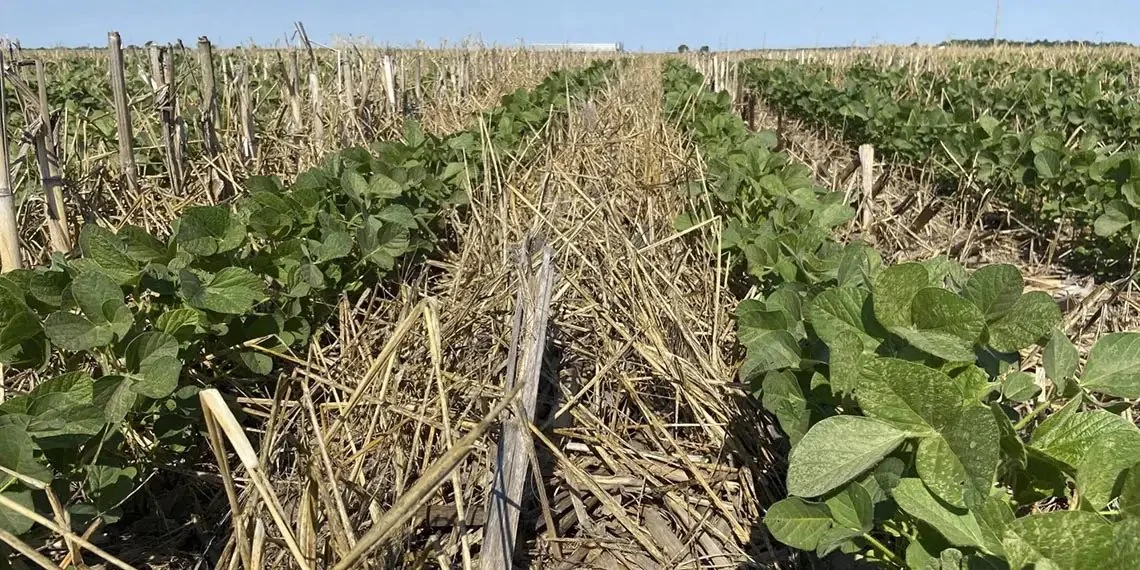
Our weather is changing. Recent weather records clearly show that our rainfalls have become more intense and less frequent. While you can irrigate to replace what ran off during a heavy storm, doing so is wasteful. We need resilient soils that act like sponges, whether they are irrigated or dryland.
The route to this resiliency found in the soil health principles:
Maintain Soil Armor
Minimize Disturbance
No-Till, Plant Diversity
Keep Living Roots in Soil (as long as possible)
Integrate Livestock
Irrigators have several built-in advantages when it comes to building soil health:
Guaranteed Cover Crops: You don’t have to pray for rain to get your cover crops established.
Supercharged Fungi: Irrigated cover crops pump root sugars to beneficial mycorrhizal fungi at higher rates. These fungi secrete natural substances that clump soil particles together, improving water infiltration and unlocking trapped nutrients.
Fertility Insurance: High-yielding irrigated fields need heavy fertilizer, which can easily leach away. Cover crop roots grab that excess nitrogen, lock it up for the winter, and release it back to your crops the following spring. That's money saved and cleaner drinking water for everyone.
Offseason Feed: Cover crops enhance livestock carrying capacity, providing offseason grazing that stabilizes your feed supplies.
“Soil armor” isn't just a buzzword. Healthy soil holds THOUSANDS of gallons more water per acre, sending it straight to the root zone instead of letting it run off or evaporate.
Decisions for this year’s crop are pretty well set, but we can observe our and our neighbor’s fields. Look closely at your fields — and your neighbors’. Where is the water running off? Where is the soil crusting?
Here is a challenge for every producer, whether you’re an observer, newbie or veteran: Try something new on just a part of your acres.
You don’t have to plant cover crops on your entire operation tomorrow. Try splitting a single field, or compare two similar fields.
But remember: Be patient. Soil biology doesn’t transform overnight. Just like pheasants or quail take a few years to rebuild their numbers after you improve their habitat, soil microbes need time to wake up. Commit to a five-year window to see the real results.
You don’t have to do it alone. The Nebraska Soil Health Coalition (NSHC) can connect you with our Producer Leads or other experienced producers in your area. They have already made both good and bad decisions, and can help you avoid many mistakes.
About the NSHC
The Nebraska Soil Health Coalition is a collaborative effort to increase sustainable agricultural production and thriving rural communities. As part of that vision, it supports Nebraska’s community newspapers.
Its mission is to advance producer-centered education, outreach, and the adoption of soil health principles to build resilient farms, ranches, and communities across Nebraska.
The author, Thomas Hoegemeyer, is a founding member of the NSHC.