
Soil Health Benchmarking
In Nebraska

Summary of the Soil Health Benchmarking Work, 2024-2026
by Dr. Bijesh Maharjhan, 8.8.26
Soil health benchmarking provides a science-based approach for evaluating the condition of agricultural soils relative to their inherent soil health potential. Rather than comparing one agricultural field with another, the approach benchmarks cropland against carefully selected native or minimally disturbed reference sites with similar soil-forming factors and climatic conditions. We termed it the soil health gap (Maharjan et al., 2020). The main premise is to allow differences in soil health to be more confidently associated with agricultural management and provide a locally relevant benchmark toward which soil health improvement can be measured.
The Nebraska soil health benchmarking effort applies this framework across agricultural landscapes by pairing croplands with appropriate reference sites and evaluating a comprehensive suite of physical, chemical, and biological soil health indicators. These include bulk density, aggregate stability, soil organic matter and organic carbon, microbial biomass and respiration, enzyme activities, and nutrient profile. The fields evaluated include both conventional systems and regenerative systems incorporating practices such as no-till, cover cropping, intercropping, and livestock integration. This approach moves soil health assessment beyond simply documenting progress from certain practices to evaluating the extent to which those practices are improving soil condition relative to an ecologically meaningful reference.
Initial results demonstrate the value of this benchmarking approach. In most cropland–reference comparisons, reference sites exhibited better overall soil health, while regenerative systems generally showed a smaller soil health gap than conventional systems. Across the measured indicators, the general pattern was reference site > regenerative system > conventional system. However, fields with long-term implementation of practices such as no-till and cover cropping substantially narrowed the gap, and some indicators even exceeded those of their corresponding reference sites. Thus, soil health benchmarking provides both a baseline and a measurable trajectory for improvement- instead of asking whether one farm is healthier than another, it asks how close a particular field is to realizing the soil health potential of that specific soil and environment. Unlike in the past, when farmers may have been satisfied if their fields performed better than neighboring farms, benchmarking cropland soil health against native reference sites shifts the perspective. In this soil health benchmarking framework, farmers effectively compete with themselves.
Maharjan Soils Lab • www.maharjanlab.com • bmaharjan@unl.edu
Soil taken from a reference site in Fillmore County, Nebraska.
“I chose to go down the regenerative ag path to take control of the future of our family ranch — not only to become more economically resilient, but to create a system that holds up against weather extremes, market extremes, and input extremes. I cannot reach any of those goals if I do not put soil health first above everything else.”
— Kipp Hinrichs, Glenvil, Clay County, Nebraska, began transitioning his conventional farmland to regenerative cover crops and forage for livestock in 2020.
Hub 1
In August 2025 and April 2026, the team measured a comprehensive suite of
soil health indicators from 3 categories at seven cropland-reference sites in Hub 1: South-Central Nebraska
PHYSICAL
Bulk Density
Compaction & pore space
Aggregate Stability
Erosion resistance and Infiltration
CHEMICAL
Organic Matter
Long-term fertility
Organic Carbon
Stored carbon & water retention
BIOLOGICAL
Soil Respiration
Active microbial life
Microbial Biomass
Living soil workforce
Enzyme Activities
Nutrient cycling
Key Findings
At 5 of 7 sites, native reference sites outperformed corresponding croplands ꟷ even fields already using no-till, cover crops, and intercropping demonstrating that there is meaningful room for improvement for every producer. For sites 6 & 7, the gap was minimal or none where there were long-term soil health practices or the cropland was healthier, signified that carefully planned and sustained soil health practices can narrow or fill the soil health gap and preserve soil resources for generations to come.
Hub 2 Initiation - Fall 2026
Efforts will expand in Hub 1 and carry over into Hub 2 (Southwest Nebraska). We will look at regenerative and conventional farmland while comparing to native reference sites. These continued efforts will allow reference comparison to multiple cropland sites representing a range of farming and grazing strategies.
This growing dataset will feed a comprehensive report and farmer-ready extension materials from the UNL/NSHC team.
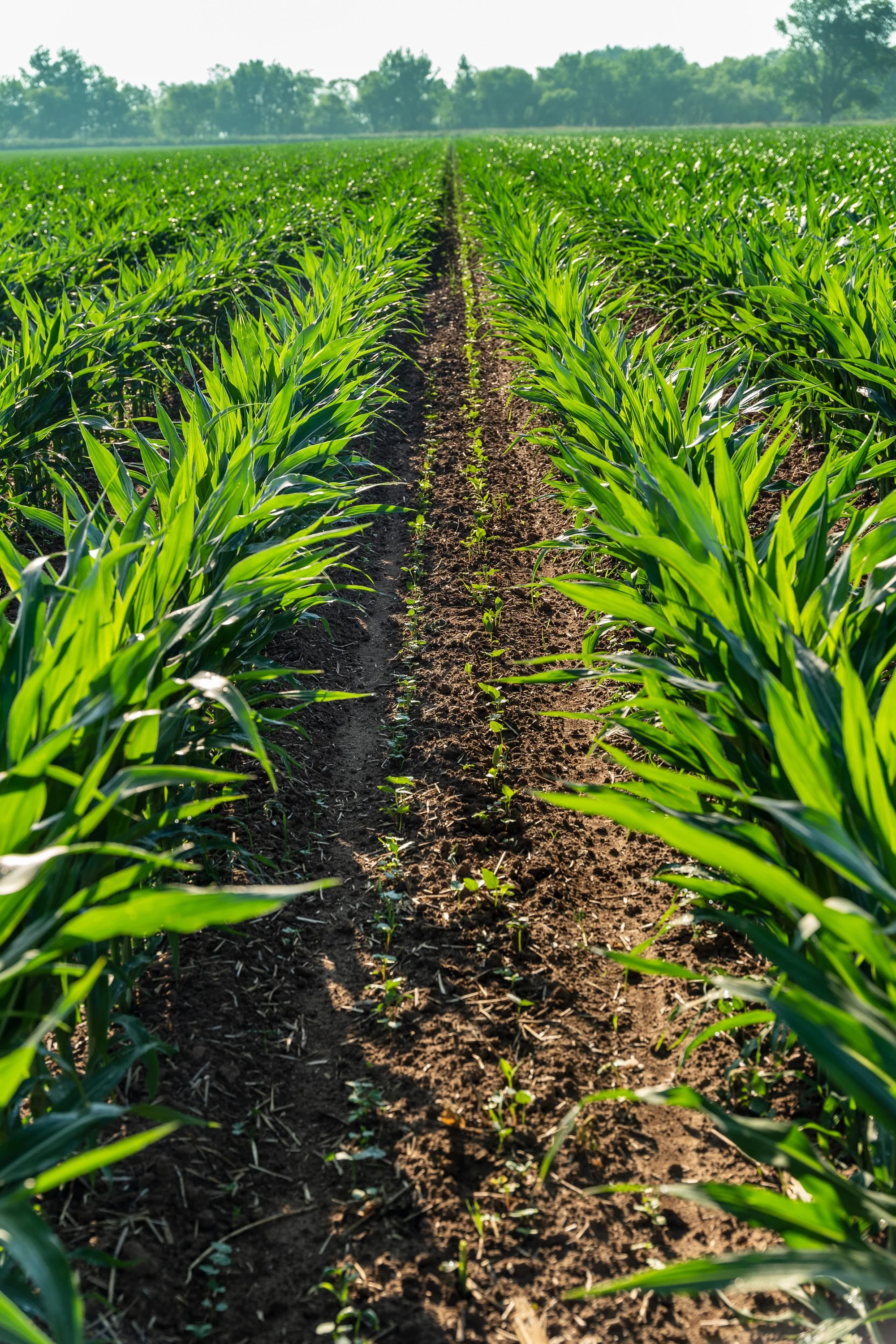
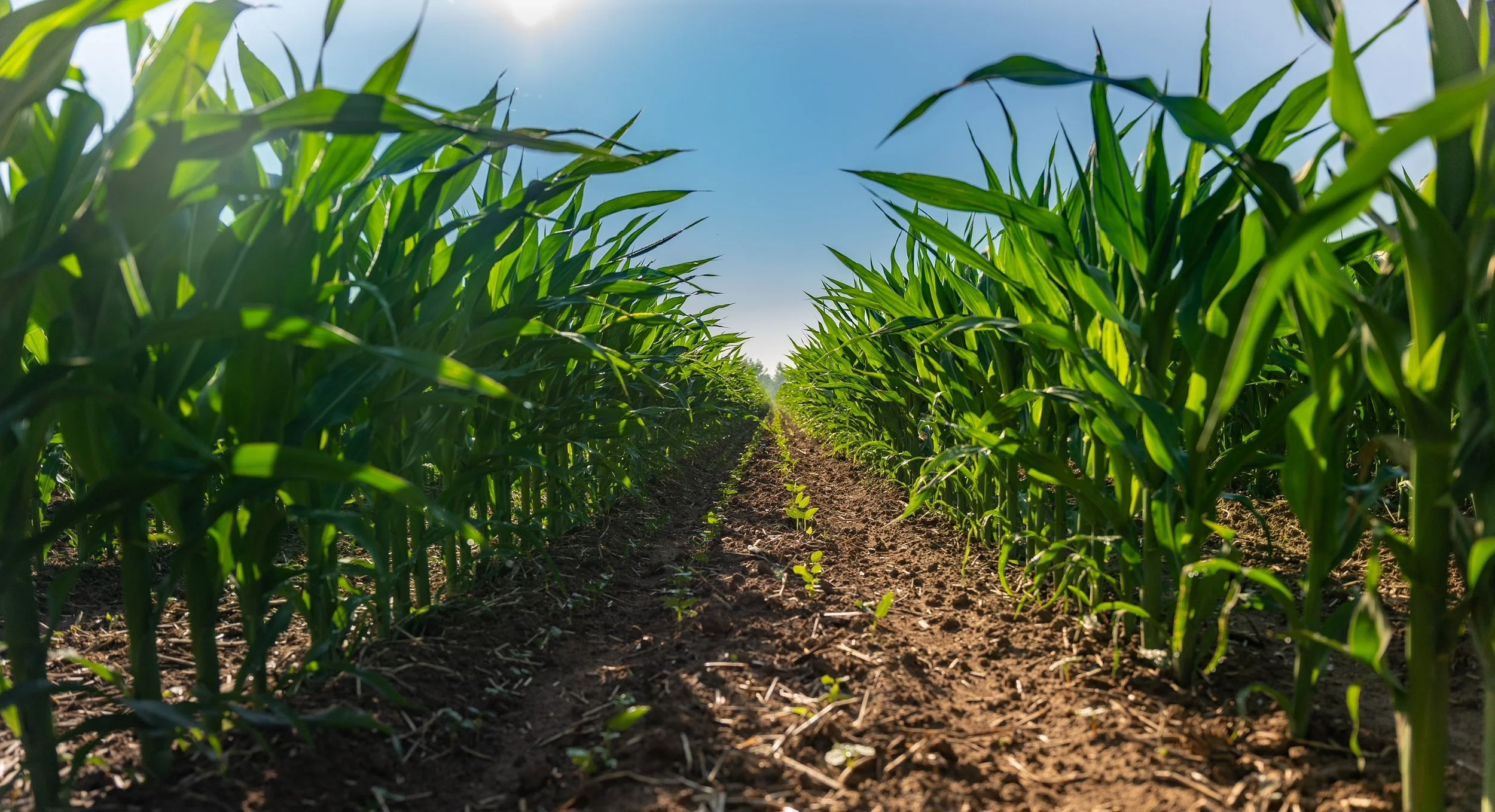
Soil samples taken from a cropland in Clay County (top) and a reference site in Hall County (bottom) for soil health assessment.
The Statewide Vision
Hubs 1 and 2 are the first planned regional hubs across Nebraska. Together, they will form a statewide soil health monitoring network providing:
Science-based tools to track soil health progress
Farmer-to-farmer learning communities
Economic resilience analysis per operation
Guidance for long-term land stewardship
Policy tools for agencies and conservation partners
Sites from 2025 and 2026–as of May 2026
Croplands (marked blue) and corresponding reference sites (marked orange)
Seven cropland–reference site comparisons
Two triplicate comparisons
One quadruplicate comparison
South-central Nebraska (Fillmore, Clay, Webster, and Hall Counties) and Lancaster County
Enroll in an NSHC Hub effort in your area!
Email: info@nesoilhealth.org
“My goal is to leave the land to whoever follows me in a state of perpetual recovery — meaning it keeps getting better every year. Most of us are tired of just talking about it. We want to do something about it.”
— Kipp Hinrichs, Glenvil, Clay County, Nebraska
— Kipp Hinrichs, Glenvil, Clay County, Nebraska
Frequently Asked Questions
What is soil health benchmarking?
Soil health benchmarking is the process where your cropland soil health is compared against nearby undisturbed native sites (reference sites). Soil health measurement, just like any measurement, becomes meaningful only when interpreted against appropriate benchmarks. We will be looking at triplicate sites which involve conventional ag sites.
How is it done?
We will find 3 sites: native, conventional, and your no-till site.
How is it different from the soil tests I am already doing?
There are scores of soil health indicators one can measure. We provide soil health indicators known to be significant based on UNL research.
In addition to your cropland data, we share benchmark soil health indicators (from the two reference sites) for your farm and/or ranch land.
What do we learn from it?
Such benchmarking simultaneously informs you where your soil stands today compared to native reference (soil health gap) and provides the ecologically potential soil health goals for you.
Please explain the soil health benchmarking process.
Triplicate site selection: Soil is collected from each site within the same agroecological region and soil type, which allows differences in soil health indicators to be confidently attributed to management practices rather than to background variation.
Soil sampling: The UNL team will collect soil samples at 0-8 inches using a handheld probe that causes minimal disturbance to land.
Soil health assessment: Key soil health indicators such as bulk density, aggregate stability, soil organic matter, soil organic carbon, nutrient cycling, microbial activity will be measured.
Long-term monitoring: Sites are revisited over time so that one can see how management decisions — such as adopting cover crops, reducing tillage, grazing, or optimizing nutrient management — translate into measurable improvements.
What benefits do I get for participating?
Producer-to-producer learning: Connect with a peer community of Nebraska farmers sharing experiences, management insights, and partnership on the soil health journey.
Economic risk analysis: Receive ROI projections and economic guidance specific to your operation and region, lowering the risk of making management changes.
Incentive navigation: NSHC helps you sort through the wide range of available funding programs and identify those most relevant to your specific context.
Broader community connection: Engage with a NSHC Stakeholder Visioning Group including lenders, water providers, conservation groups, health care, agribusiness, and educators.
Financial support/Incentives: The Coalition is providing several types of support on your soil health journey toward building this powerful community.

How do I get enrolled and involved with NSHC?
There are several ways to connect with the NSHC and begin your soil health journey:
Participate in a Hub: if you farm in south-central or southwest Nebraska, you can join the Producer Learning Community in Hub 1 or Hub 2.
Attend events: the NSHC regularly hosts producer learning days, field events, and educational sessions across the state.
Donate to help expand hubs in your region:
Sign up to receive bi-weekly updates and participate in additional risk behavior support.
For additional information
Email: info@nesoilhealth.org
