
What is in Our Water?—A conversation with Marty Stange
Media Contact:
Marty Stange, Board Member, Nebraska Soil Health Coalition
MartyStange54@gmail.com
Hometown: Juniata, Nebraska (Adams County)
The water we drink. The water that we use to irrigate crops and feed livestock. The water we swim, fish, and tank in—-it is so important.
For Marty Strange, water has been a lifelong passion. Growing up on a farm in central Nebraska, his connection to water began early, carried him through a 36-year career at Hastings Utilities and into retirement. Now a board member of the Nebraska Soil Health Coalition, Marty is dedicated to helping producers and community members answer: What is in our water?
He will share his insights and answer questions at the upcoming Nebraska Soil Health Coalition Producer Learner Community and Stakeholder Educational Session at Zach Mader’s farm (NSHC Producer Lead) near Grand Island on September 2. Please see below for the registration details.
But sometimes, Marty says, a clue to what is in your groundwater is already visible on your irrigation equipment.
Q: What can the color of a center pivot tell you about nitrate levels in the groundwater?
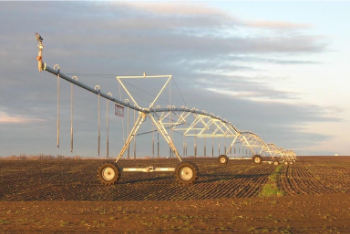
A: A Ph.D. student once asked Marty about groundwater testing near Hastings. “I said, ‘Yeah, we tested it, but there won't be any nitrates out there.’ She asked, ‘How do you know that?’ I said, ‘Well, because the pivots are red.’
With less oxygen available, bacteria turns to nitrate, a form of nitrogen, as an oxygen source, reducing nitrate in the water.
When Mader asked Marty what was in his water, Marty started with the pivots. “I asked Zach, ‘Do you have rust on your pivots?’ He said, ‘Yeah.’ I said, ‘Well, then you are probably going to have low nitrates.’”
Q: During your career with Hastings Utilities, you discovered an unexpected connection between nitrate and uranium. What did you learn?
A: “Most people just say, ‘I had my water tested,’ and you ask them, ‘What did you test?’ and they said,‘Well, the nitrates were okay,’” Marty said. “Well, there are hundreds of other chemicals that you need to also be thinking about.”
Hastings Utilities began testing its water for uranium. “All of a sudden, we found that we had uranium out there that we never expected.”
Marty took the results to University of Nebraska researchers. “They said, ‘The geology is such that you should not have this. We don't understand. “Are you sure you did the water testing correctly?”
Marty took his findings to Dr. Karrie Weber, Professor and Director with UNL’s Microbiology Program: “I don't know what is going on, but here is what I am seeing, and it's driving me kind of crazy. Can you help me make sure that I'm not insane?”
Marty explained what the researchers found: “The uranium is always there. It is a natural part of the sand and gravel. But if it is not mobile, it doesn't get into the water.”
But as nitrate moves down into groundwater, bacteria “breathe / ingest” it in. The bacteria “exhale / waste” a corrosive agent that acts on uranium in the surrounding rock, releasing it into the groundwater.
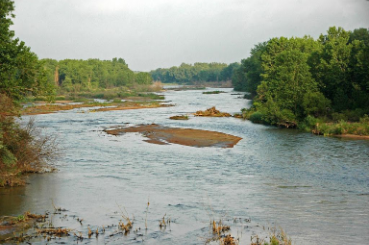
When the connection became clear, Marty recalled the reaction: “Oh my God, this is happening all up and down the Platte River.”
Q. What can this mean for farmers irrigating a crop?
“When farmers use water that's high in uranium to irrigate, the uranium clogs up the pores in the roots, which makes it seem like it's lacking water. So the first thing the farmer does is put more water on.
“Well, all you're doing is putting more uranium on … And if you're putting too much water on, you're driving the nitrates down [into the groundwater], so you're feeding the bacteria to create more uranium and further harm the plant's roots.”
Q: Can an improved understanding of water and nitrogen actually save a producer money?
A: Hastings Utilities gathered samples from beneath producers’ fields, drilling toward the groundwater.
“We went to some of these farmers and showed them how much nitrogen was sitting underneath their fields. And I remember one of them looking at it and saying, ‘You mean I paid for this, and it's just sitting down there?’”
“And I said, ‘Yes, and once it gets below that root zone, you're not getting it back.’”
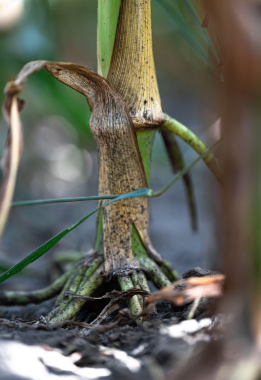
“Water management is a key to all of this,” Marty said. “Because if you're putting too much water on, you're pushing those nitrates down. If you can keep that water in the root zone, the plant has the opportunity to use those nitrates and save that money.”
Q: What do you hope producers take away from your presentation at Zach Mader’s Farm?
A: “We still have a lot to learn,” Marty said. But he remains hopeful that Nebraska can change what happens next.
“Man's activities are causing the problem, and hence we can fix it.”
Event Details
What: NSHC Producer Learner Community & Stakeholder Educational Session
When: September 2
Where: Zach Mader’s Farm (near Grand Island, NE)
Registration: Free to attend. Register now!
At the Sept. 2 event, Marty and Ward Laboratories founder Ray Ward will discuss water tests from two wells at Mader’s farm, one used for livestock and one supplying the home. They will look at nutrients in the water and what those results could mean for livestock, human health and crops. Dean Krull with the Central Platte NRD and Nebraska Extension and representatives from Sentinel Agriculture will discuss how more efficient nutrient use can conserve water, improve ROI and improve nitrogen efficiency. Mader will also share what he is learning from a pilot project using paddock grazing on irrigated ground to better utilize excess nitrogen and improve profitability. Over lunch, the producers and community members interested in support by the NSHC will identify action steps in water quality, quality and topics to be identified by the local based Stakeholder Group.
About the Nebraska Soil Health Coalition
The Nebraska Soil Health Coalition is a collaborative effort to increase sustainable agricultural production and thriving rural communities. As part of that vision, it supports Nebraska’s community newspapers. Its mission is to advance producer-centered education, outreach, and the adoption of soil health principles to build resilient farms, ranches, and communities across Nebraska. For more information, contact info@nesoilhealth.org.
The interviewee, Marty Stange, is a Board member of the NSHC and co-lead of the Hub 1 Stakeholder Visioning Group. The interviewer, Bethany Zelt, is the first NSHC Multimedia Storyteller. Through her storytelling, she elevates the voices of rural Nebraskans and helps producers share their experiences in their own words. Contact bethany@nesoilhealth.org.