

All Articles and Videos
Featured


Train up a child in the way he should go, and when he is old he will not depart from it.
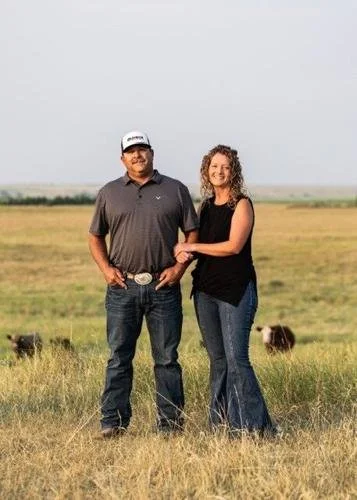
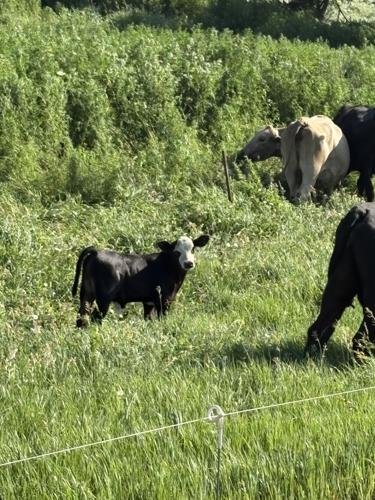
This is the sentiment of Matt and Kelsey Owens as they raise their three children on their regenerative farm in Chase County, Nebraska. The couple is leading by example in caring for the land with calloused hands, producing grassfed beef nature’s way, and prioritizing the wellbeing of future generations.
As rising input costs and falling commodity prices challenge producers across southwest Nebraska, Julie Stahly keeps searching for better answers, convinced the next experiment may uncover something that could also help other producers.
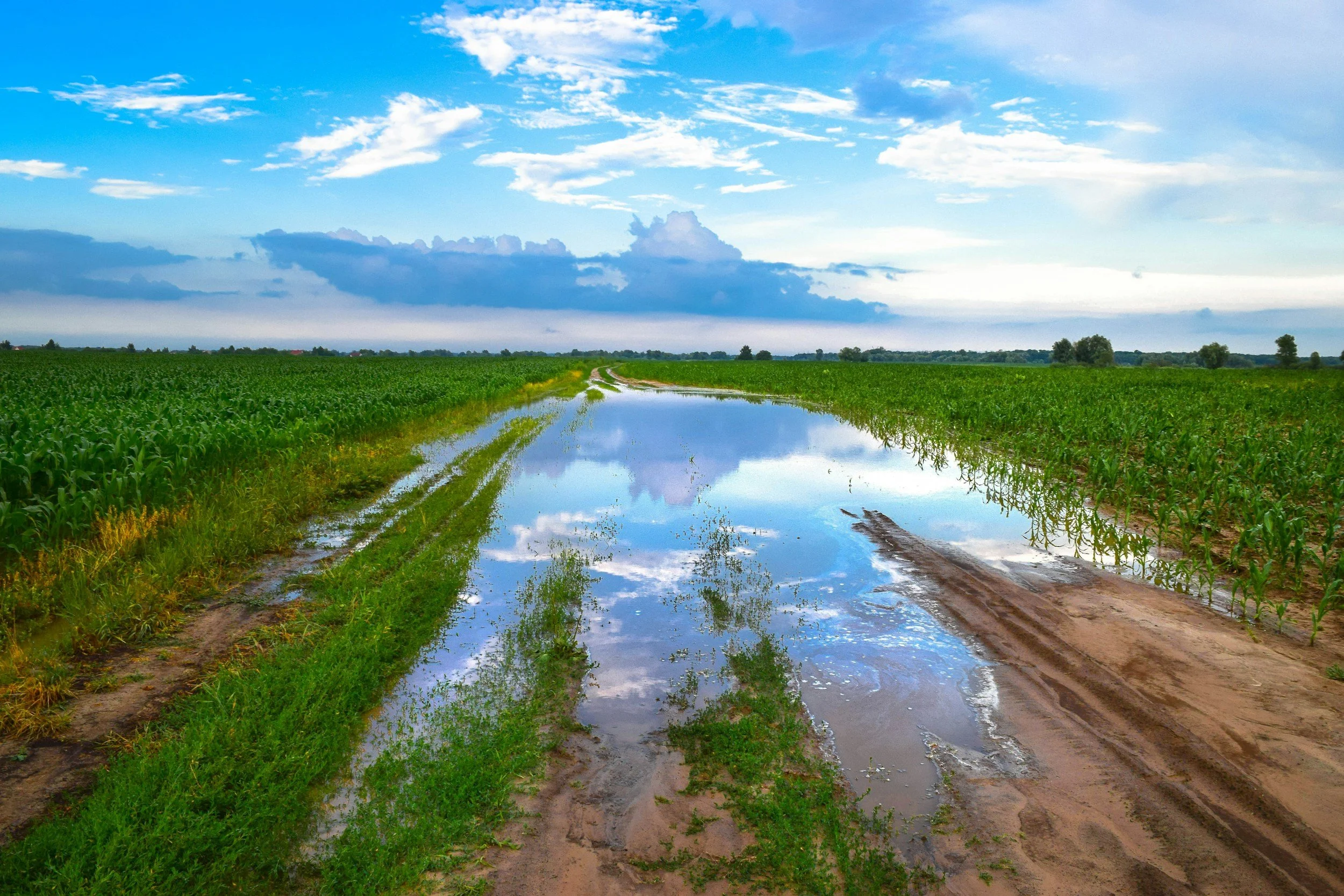
About 3.5 inches of rain came at a critical time for crops in south central Nebraska. The late July soakers relieved stress on the corn crop, potentially reversing some major yield loss.
“We were looking at some pretty significant tip back on dryland,” Milligan farmer Jordan Uldrich said, estimating that drought stress would prevent 25-40% of kernels from filling.
As a kid growing up near Hooper, NE, Tom Hoegemeyer amassed a collection of tree leaves, each from a different species he found around his family’s small farm. “I was just fascinated by all the different kinds of plants. I actually preferred crops to livestock. I didn’t ever get stepped on or pooped on by a plant.”
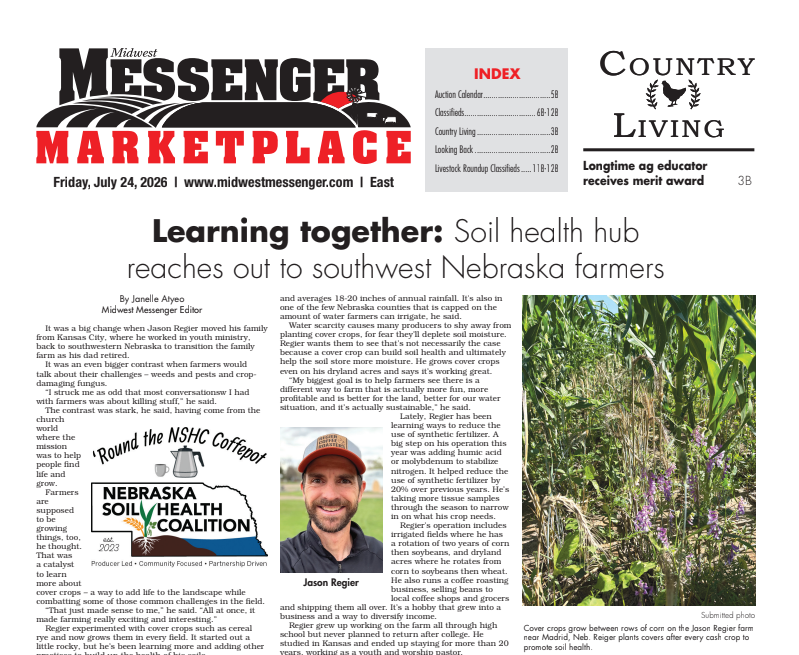
It was a big change when Jason Regier moved his family from Kansas City, where he worked in youth ministry, back to southwestern Nebraska to transition the family farm as his dad retired.
It was an even bigger contrast when farmers would talk about their challenges – weeds and pests and crop-damaging fungus.
“I struck me as odd that most conversationsw I had with farmers was about killing stuff,” he said.
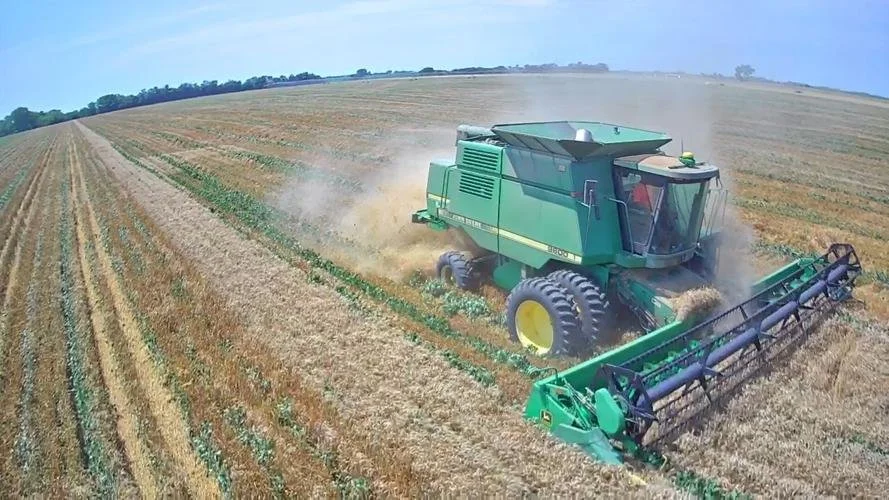
Wheat harvest is done, but the field will be harvested again this fall because a crop of soybeans is growing in the stubble.
This was the first year harvesting a relay crop for south central Nebraska farmer Jordan Uldrich. He did the custom harvest work for a neighbor who grew winter wheat and soybeans together.
At the dryland Rogers Memorial Farm at Lincoln, switching to no-till and cover crops boosted water infiltration from 1 inch per hour to 6-plus inches per hour. The result: More water in the soil, leading to consistently higher yields.
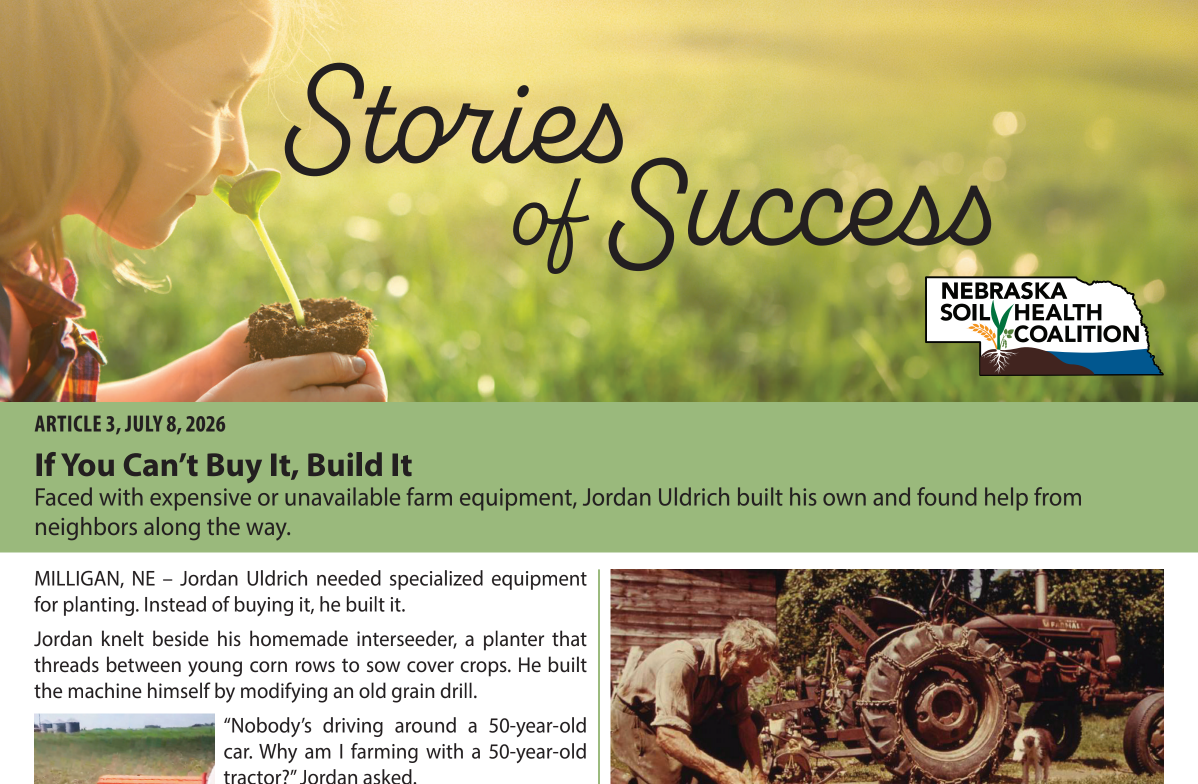
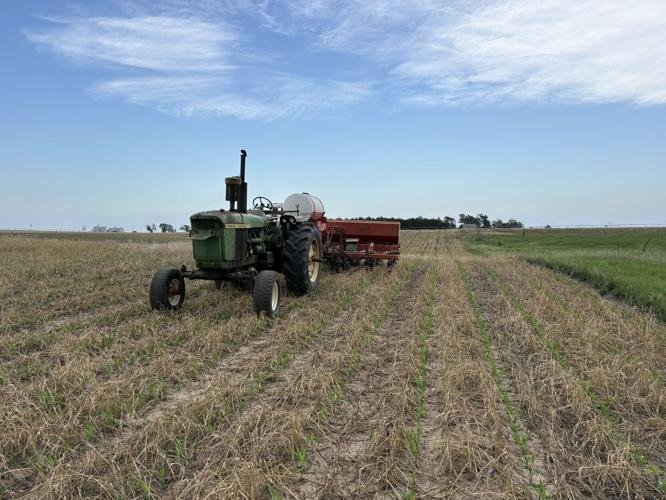
Jordan knelt beside his homemade interseeder, a planter that threads between young corn rows to sow cover crops. He built the machine himself by modifying an old grain drill. “Nobody’s driving around a 50-year-old car. Why am I farming with a 50-year-old tractor?” Jordan asked.
After another inch and a half of rain in late June, southeastern Nebraska has completely emerged from drought status, according to the U.S. Drought Monitor’s June 25 update.
Milligan-area farmer Jordan Uldrich can vouch, based on readings from his soil sensors, that the soil profile is about completely full of moisture, down as far as 48 inches. It relieves much of his worry about crop conditions this season.
Improved productivity and profitability follow as soil health improves, making production systems more resilient while reducing risks to the environment. This became the focus of my Extension programs and why I’m working with the Nebraska Soil Health Coalition (NHSC) to help producers adopt practices to improve soil health.
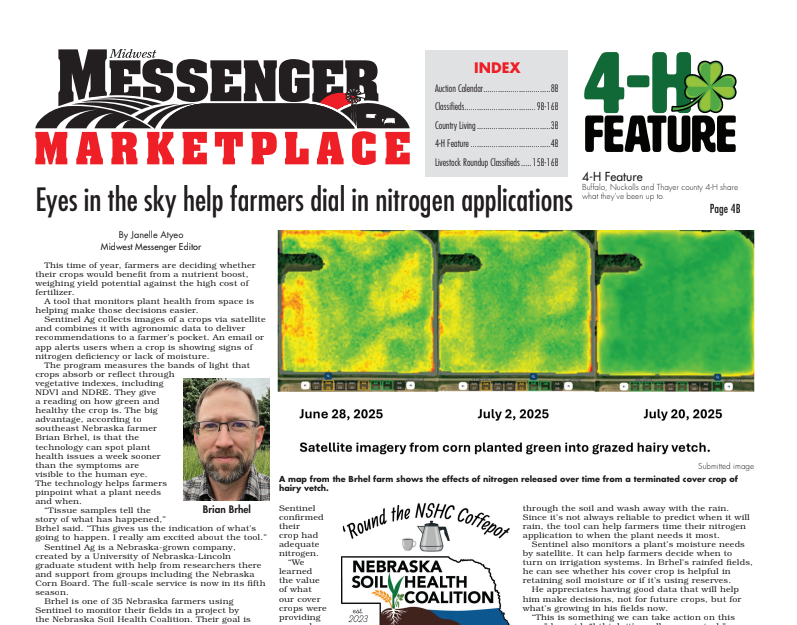
This time of year, farmers are deciding whether their crops would benefit from a nutrient boost, weighing yield potential against the high cost of fertilizer. A tool that monitors plant health from space is helping make those decisions easier.
Sentinel Ag collects images of a crops via satellite and combines it with agronomic data to deliver recommendations to a farmer’s pocket. An email or app alerts users when a crop is showing signs of nitrogen deficiency or lack of moisture.
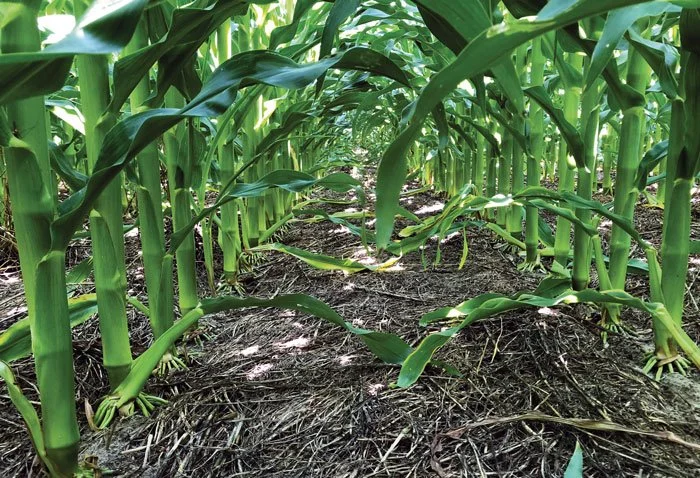
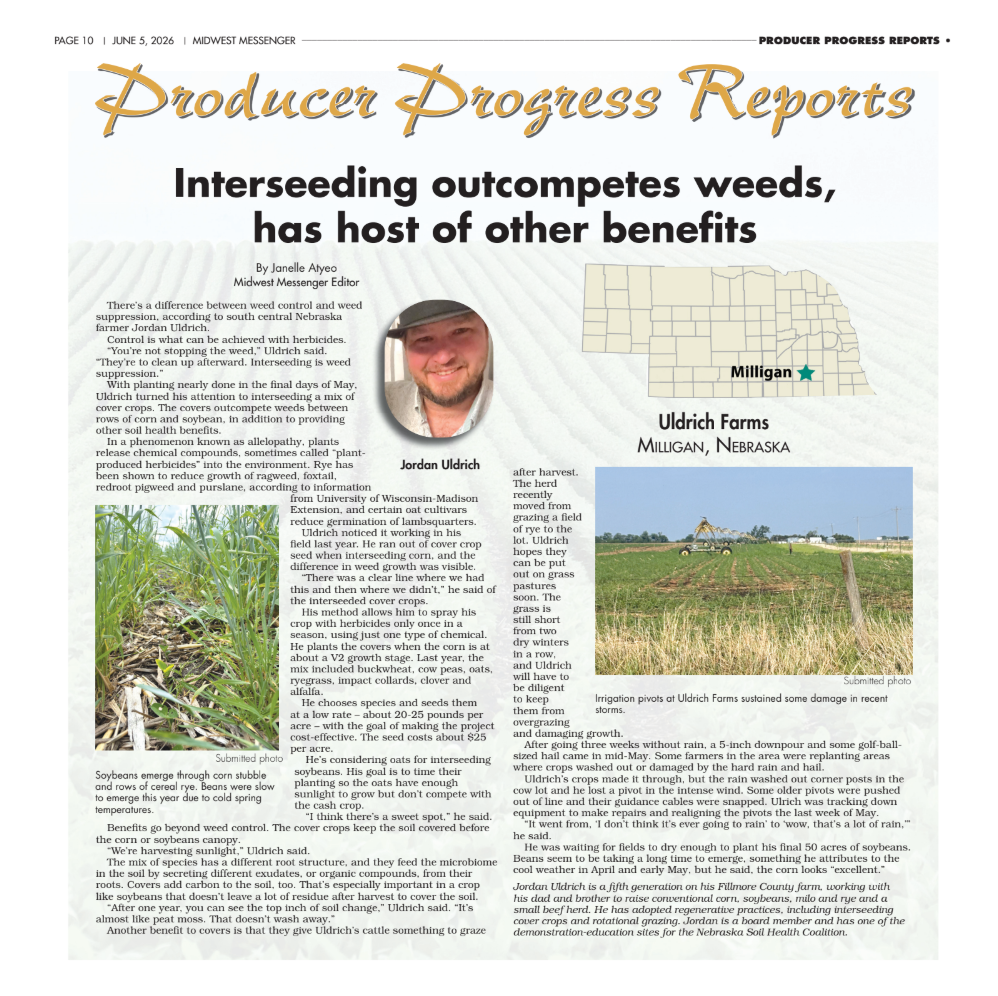
In an effort to control weeds and build healthy soils, south central Nebraska farmer Jordan Uldrich interseeded his corn rows with a cover crop mix.
He timed the work planning to catch corn at the right growth stage where the cover crop won’t compete for growth and the drill won’t damage the corn when the covers are seeded. It’s also nice to find a chance of rain in the forecast to help establish the cover crop as soon as possible.
Ag producers don’t need to be reminded of the challenging circumstances battering the industry right now. Seemingly every farmer and rancher is weighed down by growing disparity between income and expense, catastrophizing weather events and boomeranging government policies.
At the local diner in Denton, Nebraska, Brian Brhel shares a booth with his new landlord. They dig into their burgers and break the ice on their new working relationship.
Brian is a Nebraska Soil Health Coalition producer lead. His operation spans 720 acres, including 300 acres of rangeland and 420 acres of row crops.
With planting nearly done in the final days of May, Uldrich turned his attention to interseeding a mix of cover crops. The covers outcompete weeds between rows of corn and soybean, in addition to providing other soil health benefits.
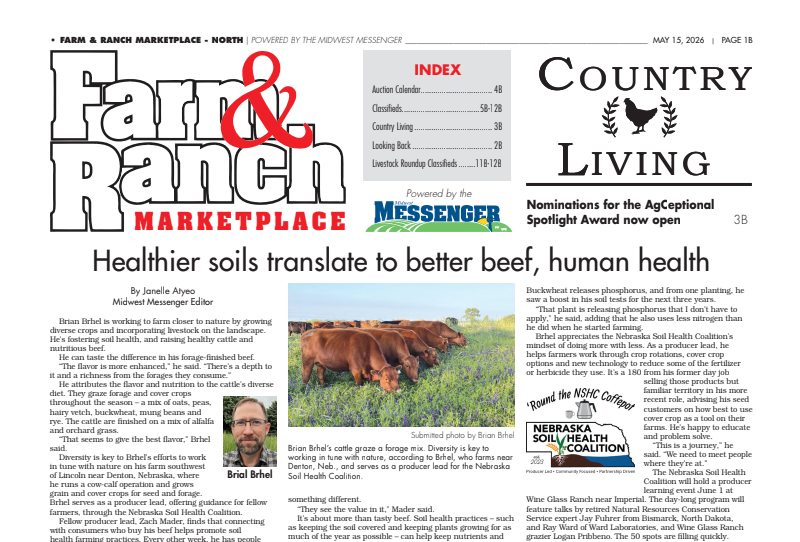
Brian Brhel is working to farm closer to nature by growing diverse crops and incorporating livestock on the landscape. He’s fostering soil health, and raising healthy cattle and nutritious beef.
He can taste the difference in his forage-finished beef.
“The flavor is more enhanced,” he said. “There’s a depth to it and a richness from the forages they consume.”
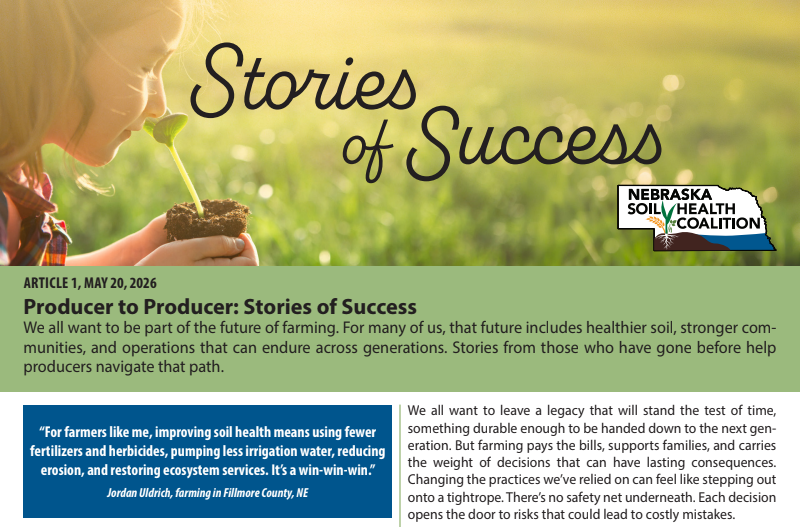
We all want to be part of the future of farming. For many of us, that future includes healthier soil, stronger communities, and operations that can endure across generations. Stories from those who have gone before help producers navigate that path.
Uncertainty over the war in Iran and its impact on fuel prices prompted south-central Nebraska farmer Jordan Uldrich to buy diesel in bulk.
Normally he buys as he needs it, but watching the price climb from $3 to $4.50 per gallon as the war goes on, he decided to secure 3,000 gallons before the number got any higher. That should get him through most of the year.
The fertilizer that south-central Nebraska farmer Jordan Uldrich is applying to his fields this year is unconventional – one is derived from squid protein – and they’re meant to feed crops a bit differently, too.
Farmers across Nebraska are facing another year of planting into dust, but by diversifying their crops and staying flexible, farmers can make the most of it.
On Zach Mader’s farm north of Grand Island, the first week of April brought an inch of rain – the first significant moisture he’s seen since September.
Jordan Uldrich didn’t set out to become a spokesperson for soil health, but that is what he has found himself doing. As a producer lead for the newly formed Nebraska Soil Health Coalition, Uldrich was part of a recent Southwest Nebraska organizational meeting held in Imperial on Tuesday, March 10.
Years of building up healthy soils created a structure beneath his feet. His soils are porous enough to let rainwater soak in. High organic matter helps stabilize soil aggregates, keeping particles in place when water and wind want to erode the earth.
A producer-to-producer learning community is one of the key components of the Nebraska Soil Health Coalition’s mission to promote the adoption of soil health systems and help rural communities. The organization is using economic and socio-behavioral interviews to arm producers with data to adjust their nutrients, improve water quality and foster trusting relationships in the name of improving sustainability.
Regenerative agriculture is gaining real momentum in Nebraska as producers search for ways to stay profitable in a very tough economic environment.
Farmers are facing a significant financial squeeze in 2025–2026, driven by high production costs, low commodity prices, and rising debt. At the same time, a growing number of ag producers and rural communities are recognizing another urgent priority: protecting the soil and water beneath our feet.
As I travel the countryside near Geneva and my farm this winter, I’ve noticed something familiar but increasingly striking: an ever-increasing abundance of harvested corn acres. As a row crop farmer, I don’t just see residue — I see opportunity. By grazing corn stalks, I’m turning what’s left in the field into cash while reducing nutrient costs for my next crop. In this article, I will share my grazing practices, walk through the economics and explore how we can improve our land. But first, it helps to step back and remember the system that built the deep, productive soils we farm today.
In the months ahead, we will highlight farmers and ranchers across Nebraska who are seeing real-world improvements to their operations by adopting soil health practices. As soil health and regenerative agriculture continue to be more commonly discussed, it is natural to wonder, “Does this actually work? Why does it matter how people farm and ranch?” These Stories of Success will not only share the experiences of producers in their own words, but also incorporate quantitative and qualitative research to validate their success. Why does it matter? Because soil health is also the basis for human health and environmental health.
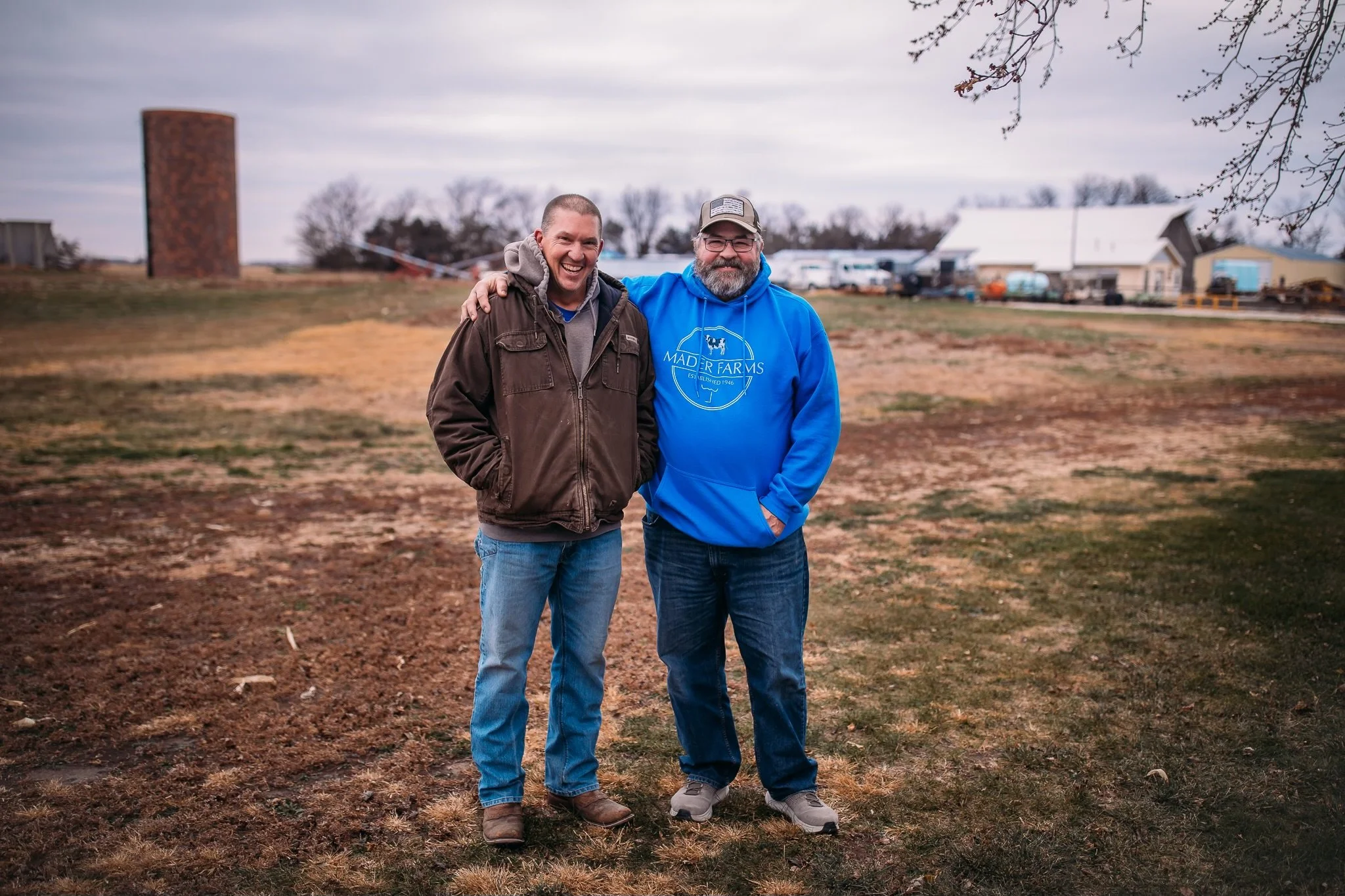
Just north of Grand Island, Nebraska, in the sweeping cropland of the Platte River basin, lie two branches of what was once one family farm. It’s a familiar story: generations ago, two brothers decided to go their separate ways, and one farm became two.
The water we drink. The water that we use to irrigate crops and feed livestock. The water we swim, fish, and tank in—-it is so important.
For Marty Strange, water has been a lifelong passion. Growing up on a farm in central Nebraska, his connection to water began early, carried him through a 36-year career at Hastings Utilities and into retirement. Now a board member of the Nebraska Soil Health Coalition, Marty is dedicated to helping producers and community members answer: What is in our water?